



Your scientific content is creating more work than it should.
Too much effort goes into creating, reviewing, reconciling, and maintaining content that should already be clear, consistent, and easier to reuse.
What the shift can deliver.
Published examples from pharmaceutical organizations adopting lean and structured authoring.

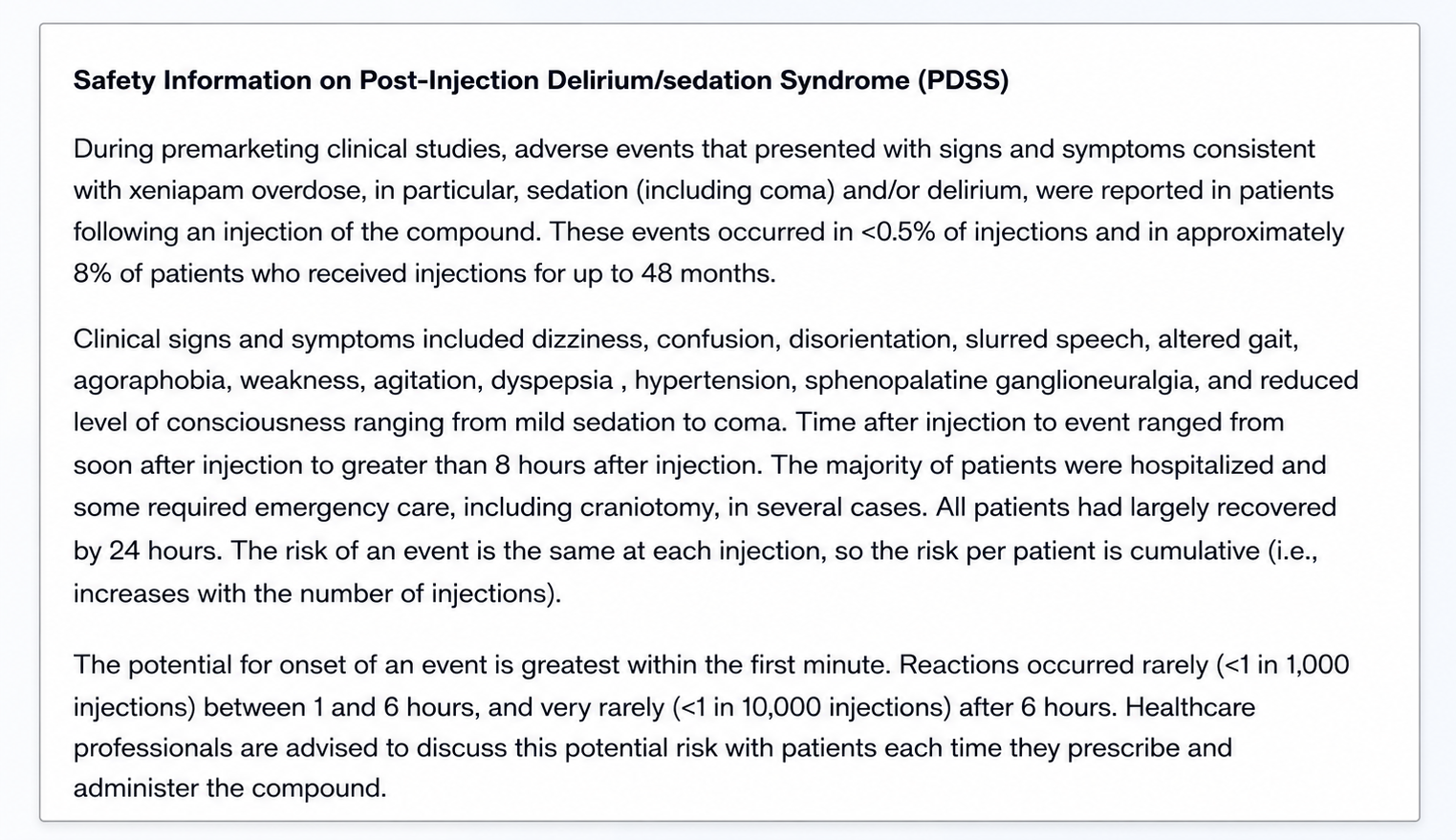
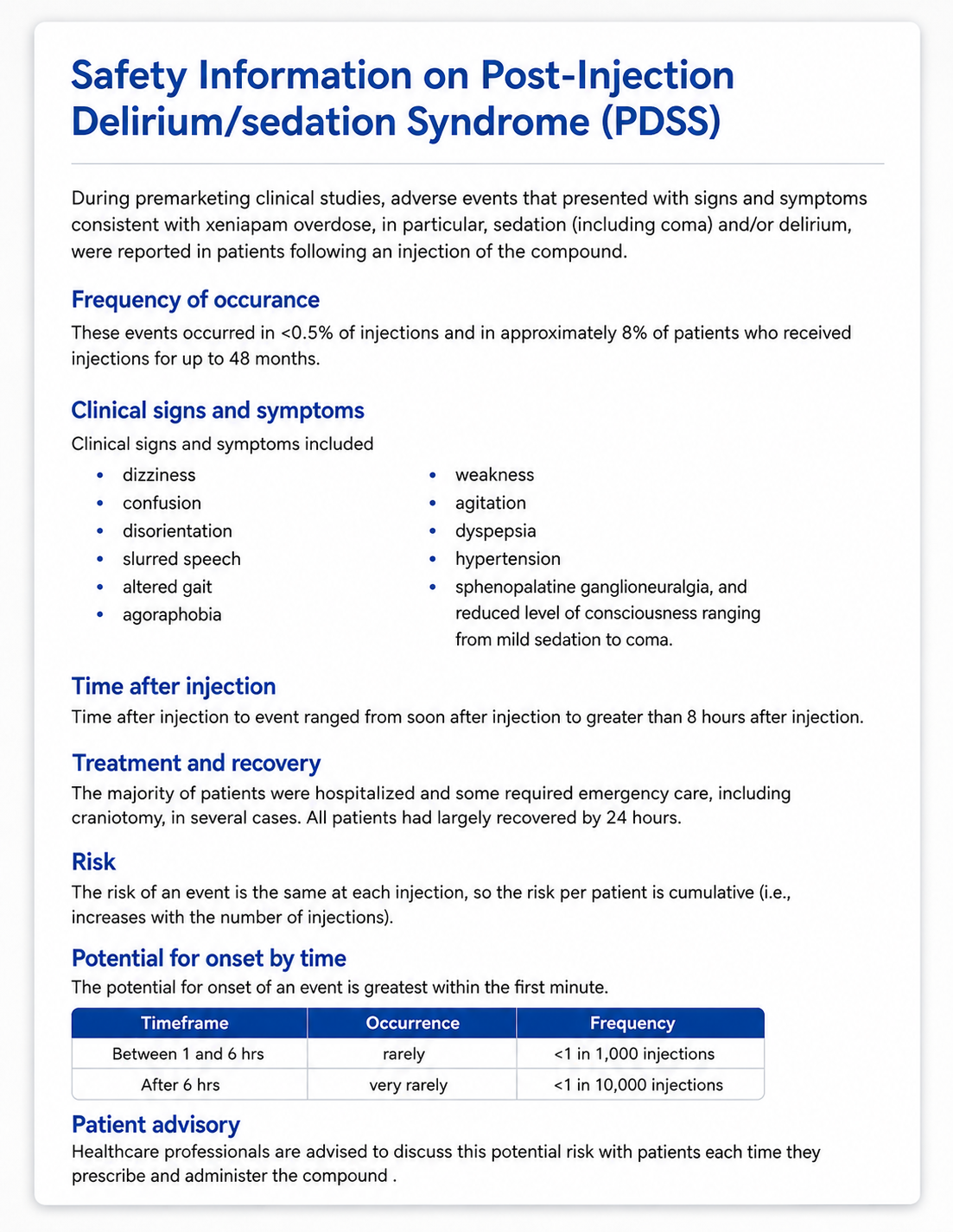
Same science. Different information architecture.
The difference is not a prettier document. It is a repeatable way of organizing scientific information so reviewers have less work to do.
Build the standard. Make it operational.
Move from individual authoring decisions to one repeatable organizational method that can be taught, applied, governed, and scaled.
Give AI the same rules your best writers use.
Codify structure, terminology, reuse rules, and content purpose so AI-assisted authoring works from a governed standard rather than generating more variation.
How it is structured
Which terminology to use
What can be reused
When to reference or generate
Proven in global pharma.

Eli Lilly and Company
See what your writers could look like with one shared standard.
We’ll show you how the method works, what changes in real scientific content, and how the same standard can support review, reuse, governance, automation, and AI.
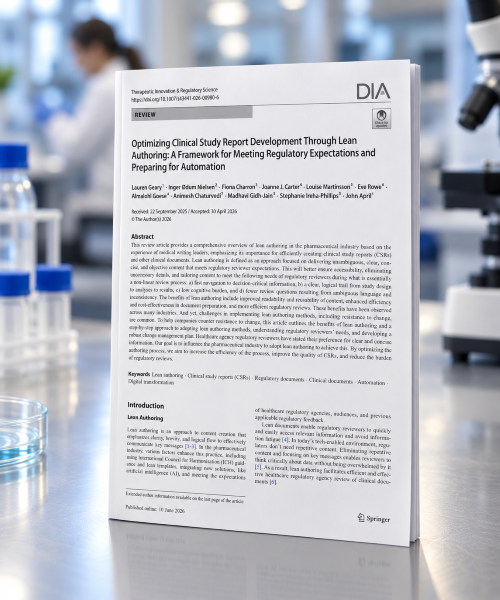
Optimizing Clinical Study Report Development Through Lean Authoring: A Framework for Meeting Regulatory Expectations and Preparing for Automation.
Therapeutic Innovation & Regulatory Science. 2026.
The authors report reductions in time from data availability to CSR approval for registrational CSRs of up to 25% at Novartis, 50% at Pfizer, and 90% at Novo Nordisk.
↑
Therapeutic Innovation & Regulatory Science. 2026.
The paper reports approximately 50% reductions in document length at Merck.
↑
Therapeutic Innovation & Regulatory Science. 2026.
The authors report that Novo Nordisk centralized CSR authoring to a team of four writers using automation, freeing 37 other writers to prioritize other business needs.
↑