


Structured Component Authoring for Pharma & Life Sciences

Turn medical writers into Content Engineers.

Precision Content training helps teams move from document-centric writing to lean, structured component authoring, creating reusable scientific content that performs better for review, reuse, automation, and AI.

Trusted by pharmaceutical leaders where scientific content has to perform

Eli Lilly

Merck

AstraZeneca

Gilead

Regeneron

The business problem

Poor authoring decisions create work everywhere else.

Scientific information across clinical study reports, regulatory content, medical communications, and approved scientific content is reviewed, revised, reused, localized, published, audited, and increasingly consumed by AI.

Review becomes rework
Reviewers spend time clarifying and reorganizing information that should have been clear at the source.
Duplication creates drift
Scientific information gets copied across documents and channels, creating more variants to reconcile and maintain.
AI
Technology scales inconsistency
Structured systems, automation, and AI inherit the authoring decisions already embedded in source content.

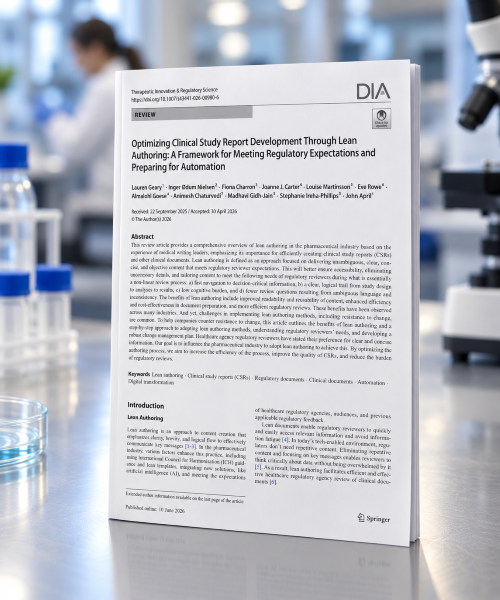
Regulators identify verbosity, repetition, lack of clarity, and poor rationale as document quality issues that delay review. 
Geary et al., Therapeutic Innovation & Regulatory Science, 2026  
What structured authoring looks like

Same evidence. Less work to understand it.

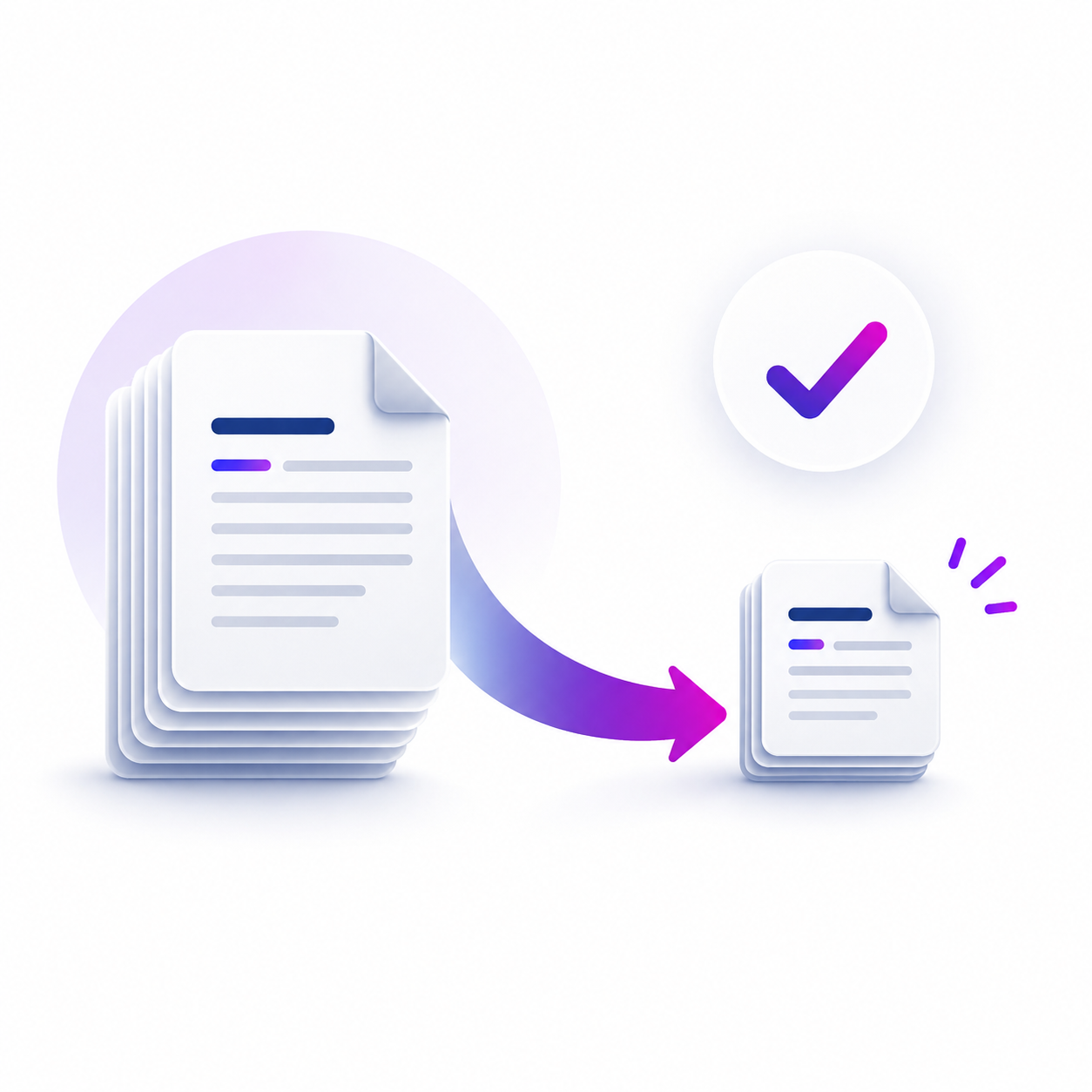
Precision Content changes the architecture of the information, not the underlying evidence.

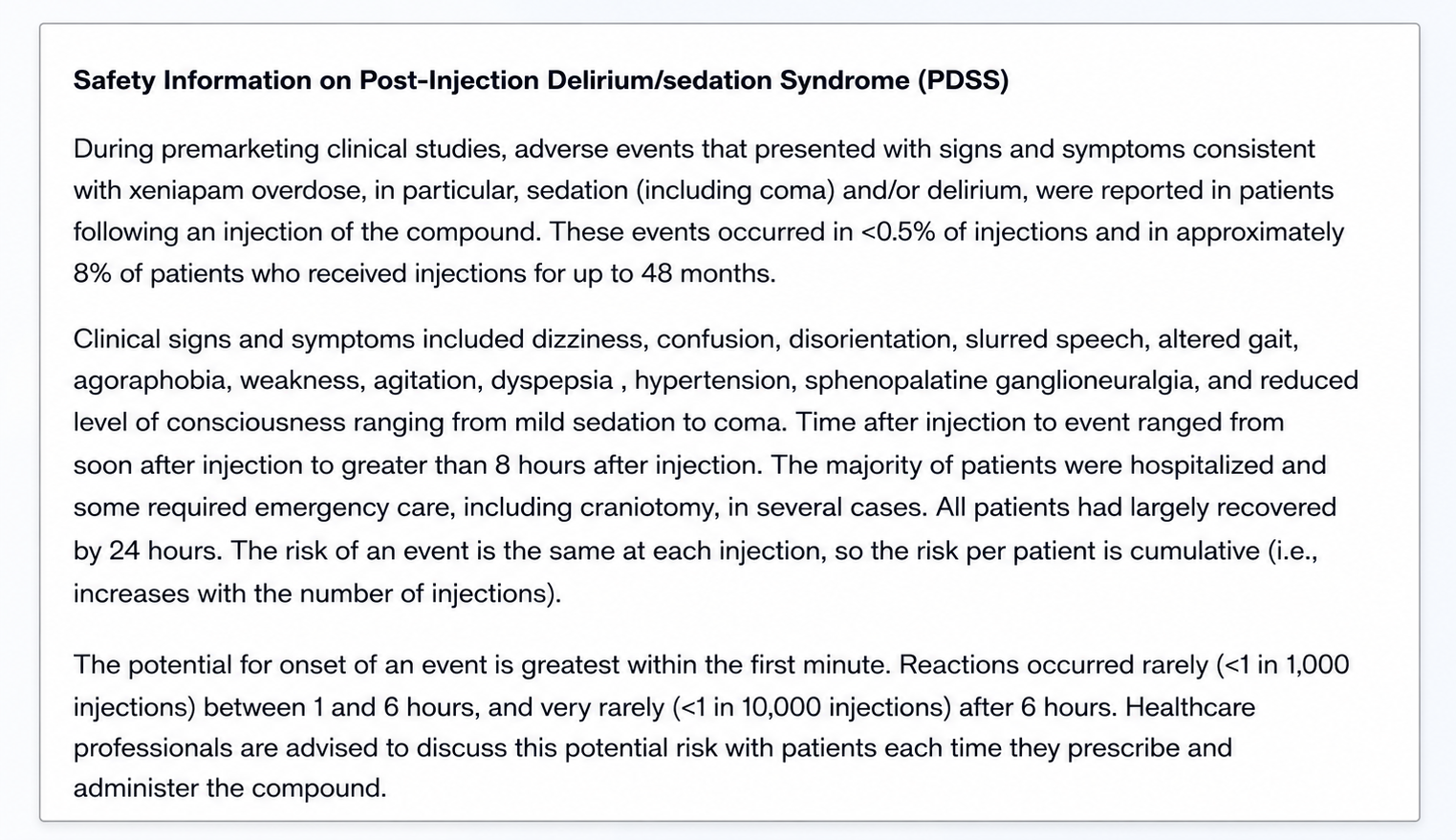
Before
Narrative-heavy
Before pharmaceutical content example
The reader has to
Find the key message.
Reconstruct relationships.
Compare findings mentally.
Separate evidence from context.

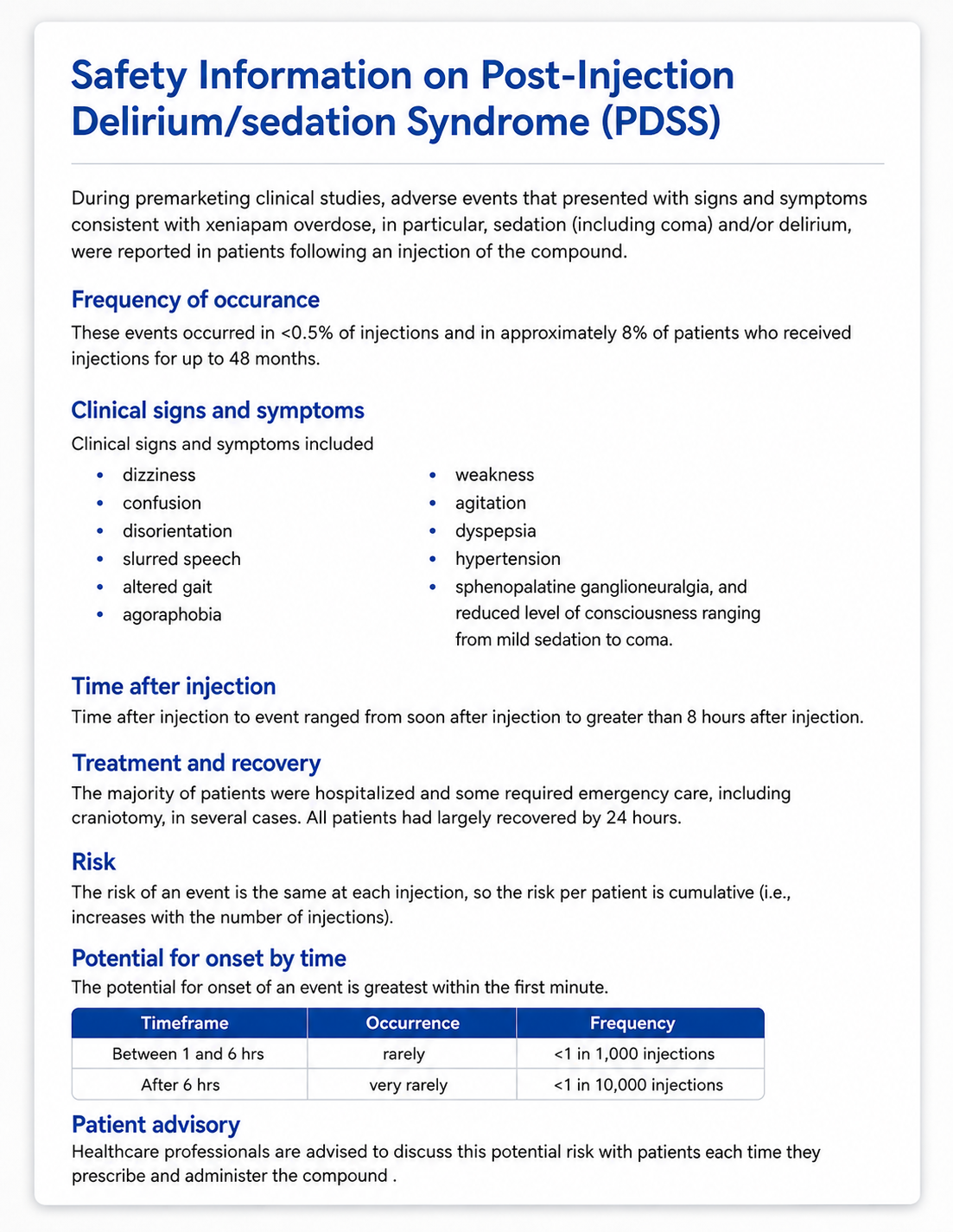
After
Reviewer-centered
After pharmaceutical content example
The structure does more of the work
Key message surfaced.
Related information grouped.
Data made comparable.
Qualification separated.
The difference
“Lean documents enable regulatory reviewers to quickly and easily access relevant information and avoid information fatigue.”
– Geary et al., Therapeutic Innovation & Regulatory Science, 2026
The Content Multiplier

Improve content at the source. Create value everywhere it travels.

Templates provide the shell. Capability changes the decisions writers make inside it. The writer’s decisions shape the performance of the entire information lifecycle.

At the source
Lean + Structured component authoring
Review
Evaluate evidence faster.
Reuse
Reuse trusted information confidently.
Governance
Apply one consistent standard.
Automation
Process predictable information reliably.
AI
AI
Ground AI in clearer source knowledge.

The Precision Content engagement

Build the capability. Then make it stick.

Move from inconsistent authoring practices to one repeatable standard.

01
Assess
Find where authoring and review friction begins.

02
Define
Establish the shared writing, structure, and component standard.

03
Train
Build capability in the Precision Content methodology.

04
Apply
Create reusable, AI-ready structured components.

05
Reinforce & Scale
Embed the standard through coaching, reuse, automation, and AI.

Precision Content Writing Programme
Learn it. Apply it. Reinforce it.
The programme combines foundational learning, real-content application, and ongoing reinforcement so the standard becomes part of how the team works.

Learn
E-learning
Build shared foundations in structured authoring and the Precision Content methodology.

Apply
LIVE Workshops
Apply the method to real clinical, regulatory, and medical content with expert guidance.

Reinforce
Coaching & review
Coach, review, and sustain the standard until the new authoring behaviour becomes repeatable.

One method. Real content. A standard your team can sustain.

For medical & regulatory writers

Become a Content Engineer.

Learn to deliberately design scientific information so it performs across its lifecycle.

The shift
A medical writer creates documents. A Content Engineer designs reusable scientific information that works across systems, channels, and AI.

What teams learn
Design for the reader
Surface what matters and reduce cognitive effort.
Structure by intent
Break information into clearly defined components with distinct communication functions.
Write lean and precisely
Remove repetition and ambiguity without losing scientific meaning.
Design beyond the document
Create components that can be governed, assembled, automated, published, and grounded into AI.

AI-augmented authoring

Turn your writing methodology into an AI authoring standard.

AI can help writers move faster. The bigger opportunity is to make that speed more consistent.

Precision Content helps organizations codify their content model and writing standards into AI-augmented authoring workflows.

Teach the system the standard
What information belongs in each component
How that information should be organized and written
Which terminology, structures, and patterns to use
When to reuse, reference, or generate content

Faster drafting. Greater consistency. Less rework. Better reuse. Stronger governance.
Don’t just train writers on the standard. Teach the authoring system the standard too.

Client evidence

Structured authoring becomes an organizational capability.

Eli Lilly and Company
“Once we began applying structured authoring methods, we saw massive page reductions in some documents. The content was much more valuable and fit for purpose.”
Senior Director, Adaptive Content Strategy
Eli Lilly and Company

Client logo
“Precision Content training completely transformed my approach to writing. My documents are now clearer, easier to read, and more effective. It’s even helped me get better results using GenAI.”
Specialist – Medical Information and Communication
AstraZeneca

Lean Authoring Readiness Review

Find where authoring friction is slowing you down.

Share a representative sample. We identify the biggest authoring and structure issues, then recommend the highest-priority next step.

Request a Readiness Review →

You receive
Authoring readiness
Where current practices support or block lean, structured content.
Top sources of friction
The decisions creating the most unnecessary writing and review work.
Recommended next step
The standards, capability, or training path most likely to create value.

Write for the reviewer. Structure for reuse. Engineer for AI.
Precision Content helps teams create scientific information that is clear for people, reusable across the organization, and ready for automation and AI.